
Is Your Hard Water Preventing You From Reaching Your Hair Goals?
By: Abigail Gutierrez
You’re doing all the right things: using professional haircare, getting regular trims, maybe even coloring your hair less often or cutting back on heat styling.
And yet… your hair still feels dry, dull, rough, or brittle. Your ends keep splitting. Your hair seems to grow to a certain length and then just… stops.
But what if your hair isn’t having a growth problem—it’s having a length-retention problem?
One thing that may be working against you is the water you wash your hair with.
What Is Hard Water, and What Does It Do to Your Hair?
Hard water contains higher concentrations of dissolved minerals, particularly calcium and magnesium. Depending on your water source, other metals may also be present.
With repeated washing, these minerals can accumulate on the hair fiber. This buildup can be particularly problematic for porous, damaged, lightened, or chemically treated hair.
You may notice:
Hair that feels rough, stiff, or coated
Dullness or a lack of shine
Increased tangling
Dryness that seems difficult to correct
Hair that doesn’t feel clean, even after washing
Increased frizz
Color that doesn’t look or behave the way it normally does
More breakage, particularly on already damaged or porous hair
Blondes may notice dull, unwanted yellow tones that seem unusually difficult to correct with toner or purple shampoo.
So if you’re experiencing several of these symptoms and you live somewhere with mineral-rich water, like Colorado, your water may be part of the problem.
But Is Hard Water Actually Stopping Your Hair From Growing?
Not exactly.
Your hair grows from the follicle beneath your scalp. However, if your ends are breaking as quickly as you’re gaining new length, it can seem like your hair has stopped growing.
So, if your goal is longer, healthier hair, we don’t just want to ask:
“How fast is my hair growing?”
We also need to ask:
“How much of that growth am I actually keeping?”
This is what we call length retention.
So How Do We Get the Buildup Out So the Ends Can Get Busy Growing?
A normal shampoo and conditioner may not be enough if you’re dealing with mineral or metal buildup. This is where products specifically designed to address buildup can make a difference.
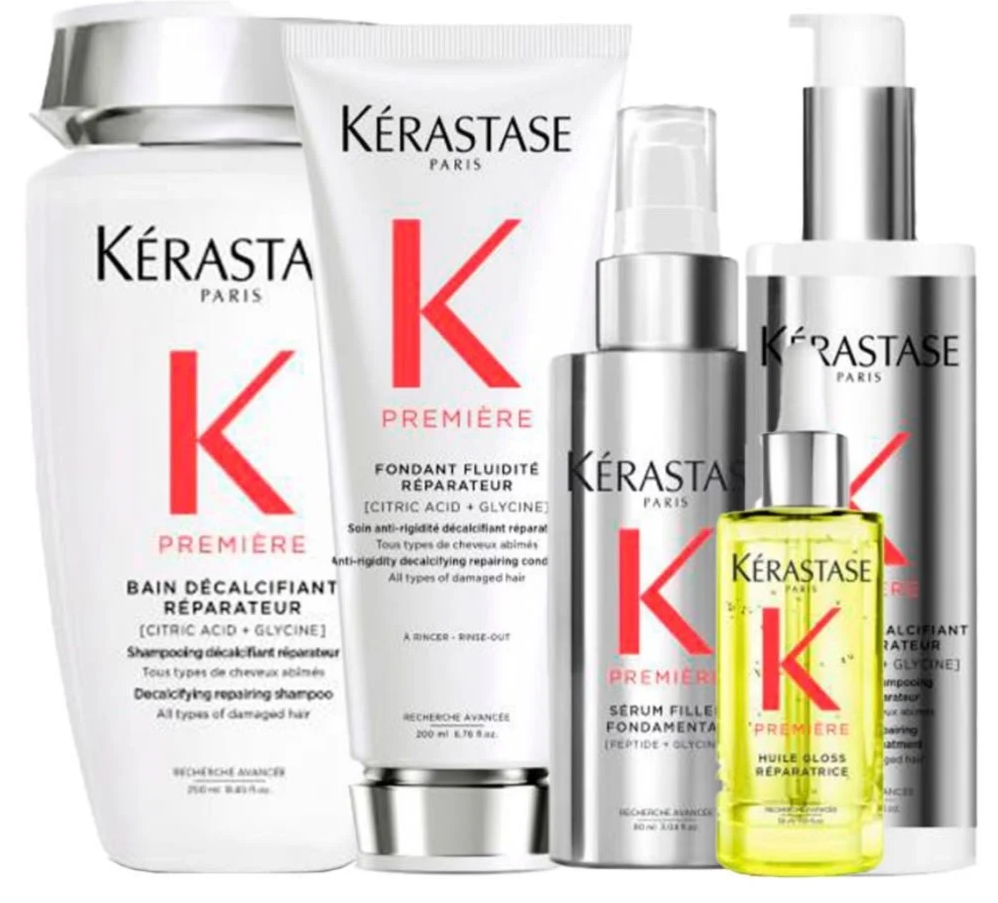
Kérastase Première: Decalcifying and Repairing
One option we use for hair affected by hard-water calcium is Kérastase Première.
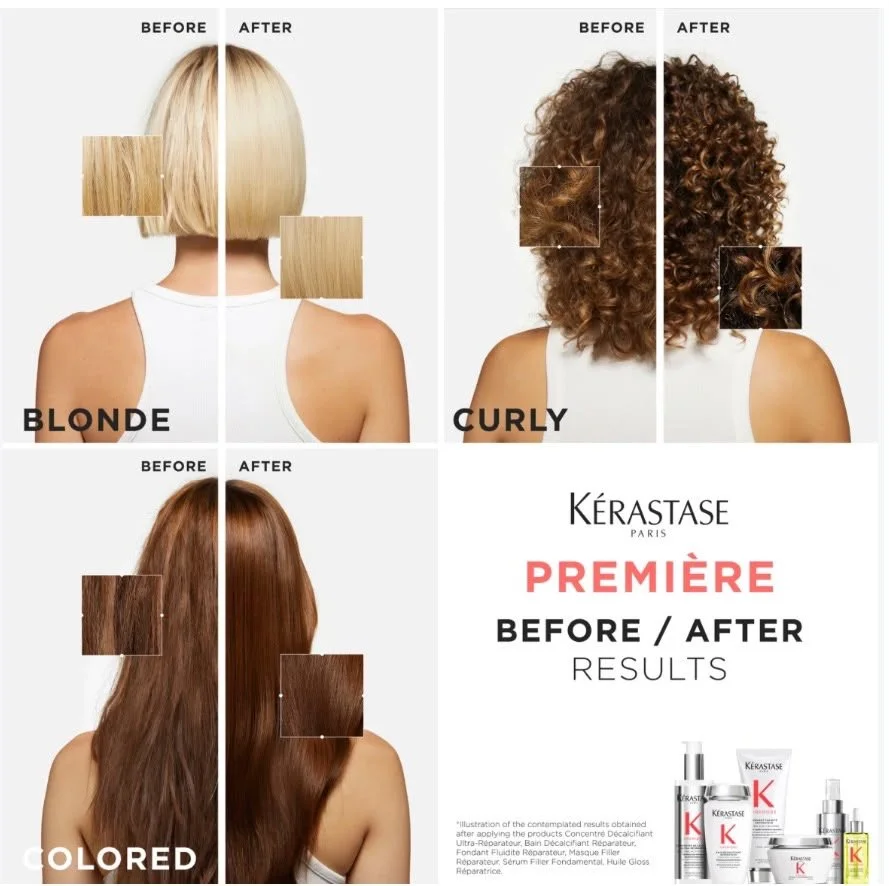
Première was specifically created to address calcium buildup from hard water. The system combines citric acid and glycine to help remove calcium while simultaneously supporting the repair of damaged hair.
The system includes:
Première Concentré Décalcifiant Ultra-Réparateur: A pre-shampoo treatment designed to remove calcium and reinforce the hair.
Bain Décalcifiant Réparateur: A shampoo that continues the decalcifying and repairing process.
This is where the layering concept becomes important.
Calcium doesn’t necessarily disappear from your hair after one wash just because you used a product designed to remove it.

Why At-Home Première Care Matters
Kérastase’s Première system uses a layering technique, allowing the decalcifying ingredients to work through different layers of the hair fiber.
The professional treatment provides a more intensive approach, while the at-home routine continues that process between salon visits.
If buildup has accumulated over time, one treatment may not completely address everything at once. That’s why consistent at-home care can be important for continuing to remove buildup and maintaining the hair between professional treatments.
Think of your salon treatment as resetting the hair.
Then, your take-home routine helps you maintain it.
If your water continues to expose your hair to calcium, you don’t want to remove the buildup once and then allow it to accumulate again.
Using a decalcifying routine at home can help address ongoing calcium exposure and maintain the results of your professional service. Kérastase specifically recommends using the Première pre-shampoo treatment followed by the decalcifying shampoo as an at-home decalcification ritual.
What About a Shower Filter?
This is where you need to be careful when shopping.
Not every shower filter removes the minerals responsible for hard water. Some are designed primarily to reduce chlorine or other contaminants, while true water softening is a different process that reduces calcium and magnesium.
When choosing a system, look for one that specifically claims to reduce these minerals—and always check exactly what the manufacturer says it’s designed to remove.
And remember: a shower filter won’t remove the buildup that’s already on your hair. You’ll still need products or treatments designed to address existing mineral buildup.
What Should You Do If You Think Hard Water Is Affecting Your Hair?
Start by talking to your hairstylist. We can look at the condition of your hair and help determine whether mineral buildup may be contributing to what you’re experiencing.
Depending on your hair, we may recommend:
A professional mineral- or metal-removing treatment
Kérastase Première decalcifying and repairing treatments
A customized conditioning or repair treatment afterward
A decalcifying or metal-conscious home-care routine
Evaluating your home’s water quality
Considering appropriate water filtration or softening
Adjusting your routine to help prevent future damage
Removing buildup is only the first step. The hair underneath still needs conditioning, repair, protection, and gentle handling.
If you’re in Colorado and struggling with dry, dull, stiff, tangled, or breakage-prone hair, let’s talk about your water—and your hair quality.
Sometimes reaching your hair goals isn’t about making your hair grow faster.
It’s about protecting the hair you’ve already grown into being the best hair you’ve ever owned.