
By: Evelyn Clubb, hairstylist at Forma Collective Salon
@evelynshairclubb
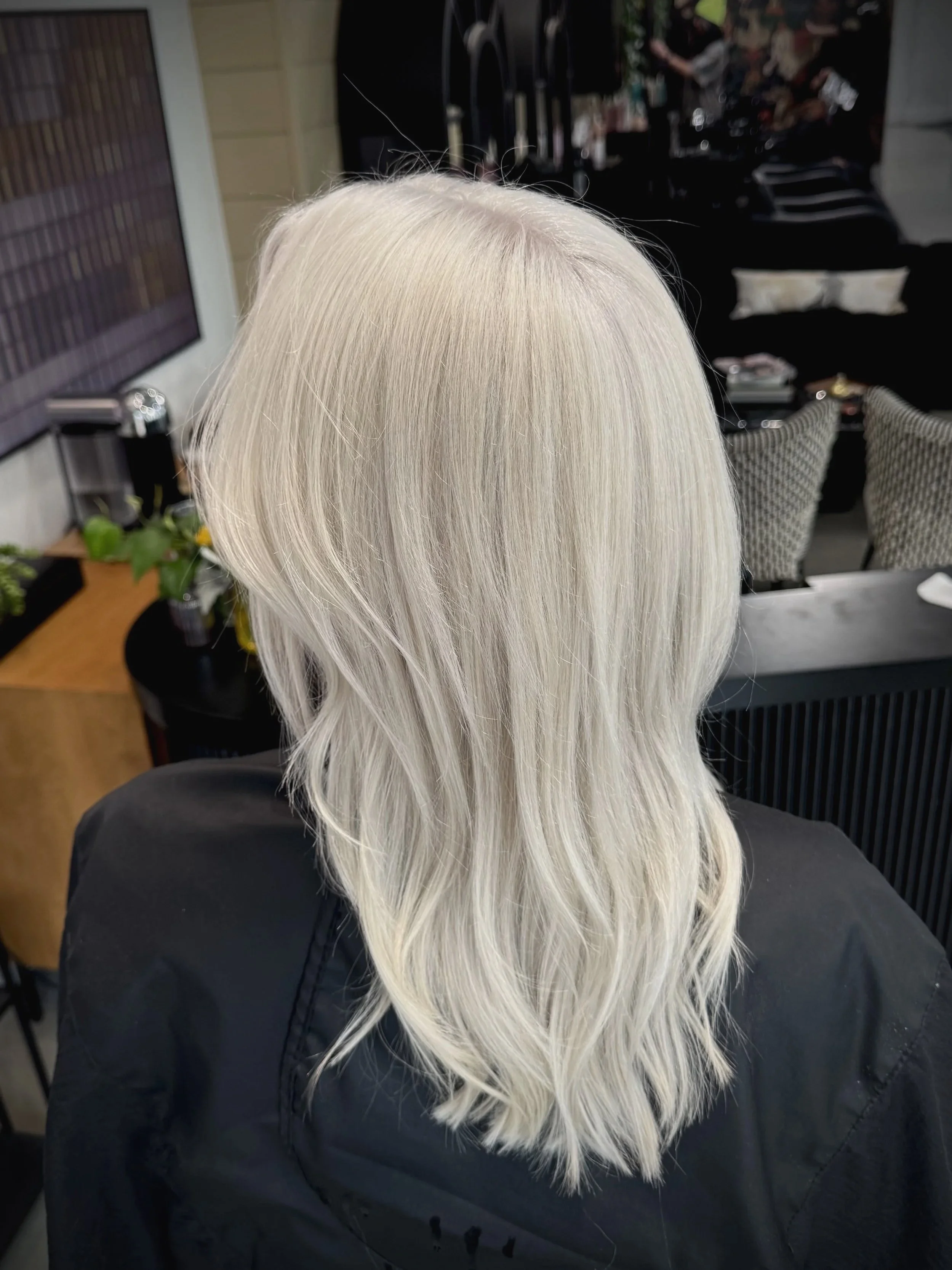
Scalp bleach is not just putting bleach on the roots
I know what it feels like to have your hair fried off during a color service, because it happened to me. That’s a big reason I’m so particular about scalp bleach. It’s the color service I do the most at Forma, and I care a lot about getting the sectioning, saturation and timing right.
If you found this after my scalp bleach carousel, here’s the longer version of what I was talking about. Scalp bleach can create the bright, even canvas a lot of platinum blondes and vivid colors need, but the plan is different for every person. Hair history, density, scalp heat, section size, saturation and the lightener all matter. I could genuinely yap about the little details that make a difference.
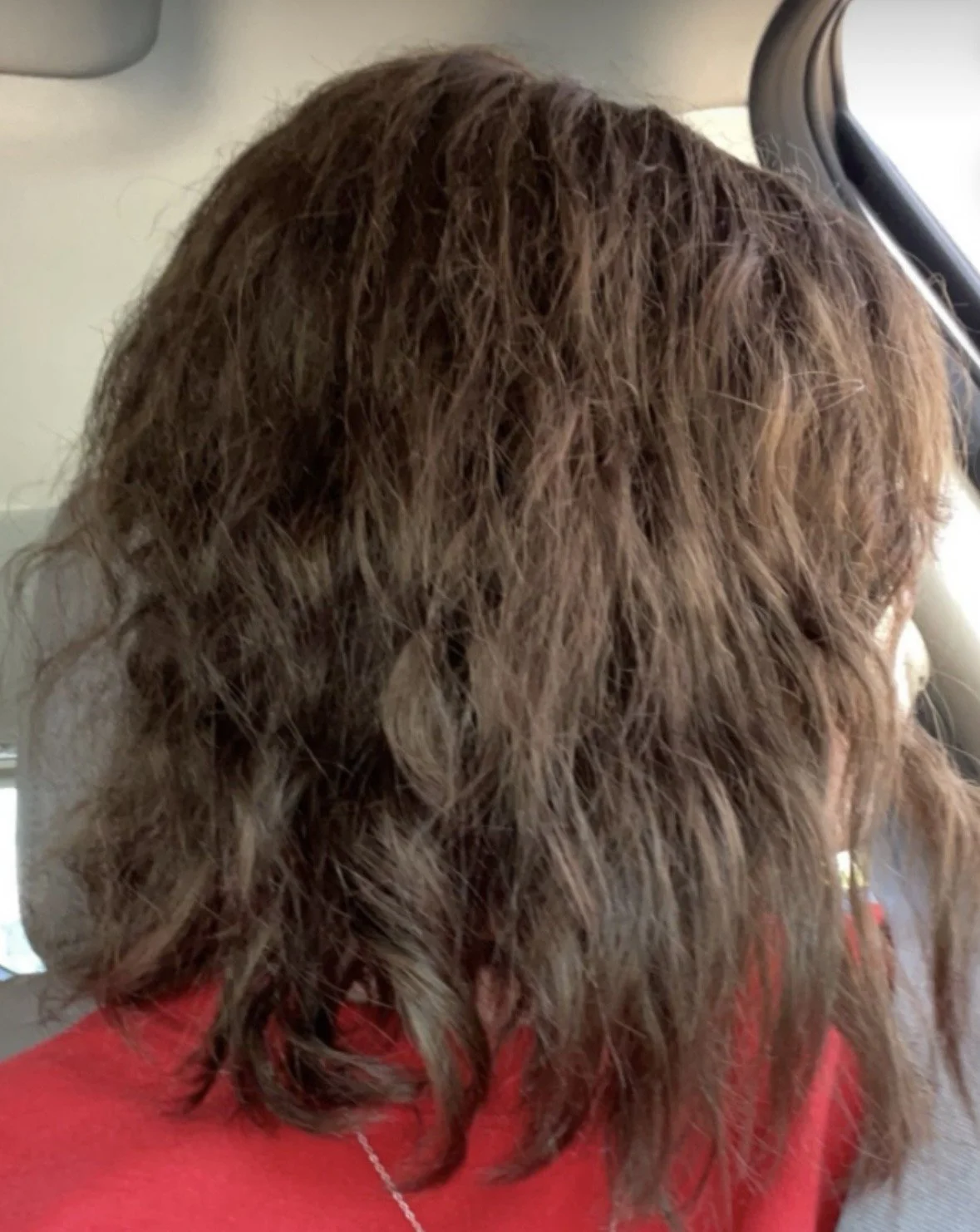

The lightener and developer matter
I choose a professional lightener that’s made to be used on the scalp and stays controlled in the sections. I mix one part lightener with one and a half parts developer, following the manufacturer’s directions for the product I’m using. I want the lightener to stay where I put it instead of swelling into the next section or onto hair that’s already lightened. Overlapping it where it doesn’t need to go can put that hair through it all over again. Developer that’s too strong, or using lightener outside the directions, can cause a chemical burn, so this is not the part where we freestyle. 💀
I adjust developer strength as I go and watch how each section is processing. More strength isn’t automatically better; the plan has to make sense for the actual hair in my chair.
Retouch maintenance and regrowth
My usual timing for a scalp bleach retouch is around six weeks, but there isn’t one schedule that works for everyone. The time between appointments and the application depend on how quickly the client’s hair grows, their density, hair type, starting level and hair history. Hair doesn’t grow evenly across the head, so the line of demarcation can look more pronounced as regrowth gets longer. Once regrowth is eight weeks or more, I change my application: I apply lightener off the scalp first, then go back when I cross check to hit the roots and feather into the line of demarcation.
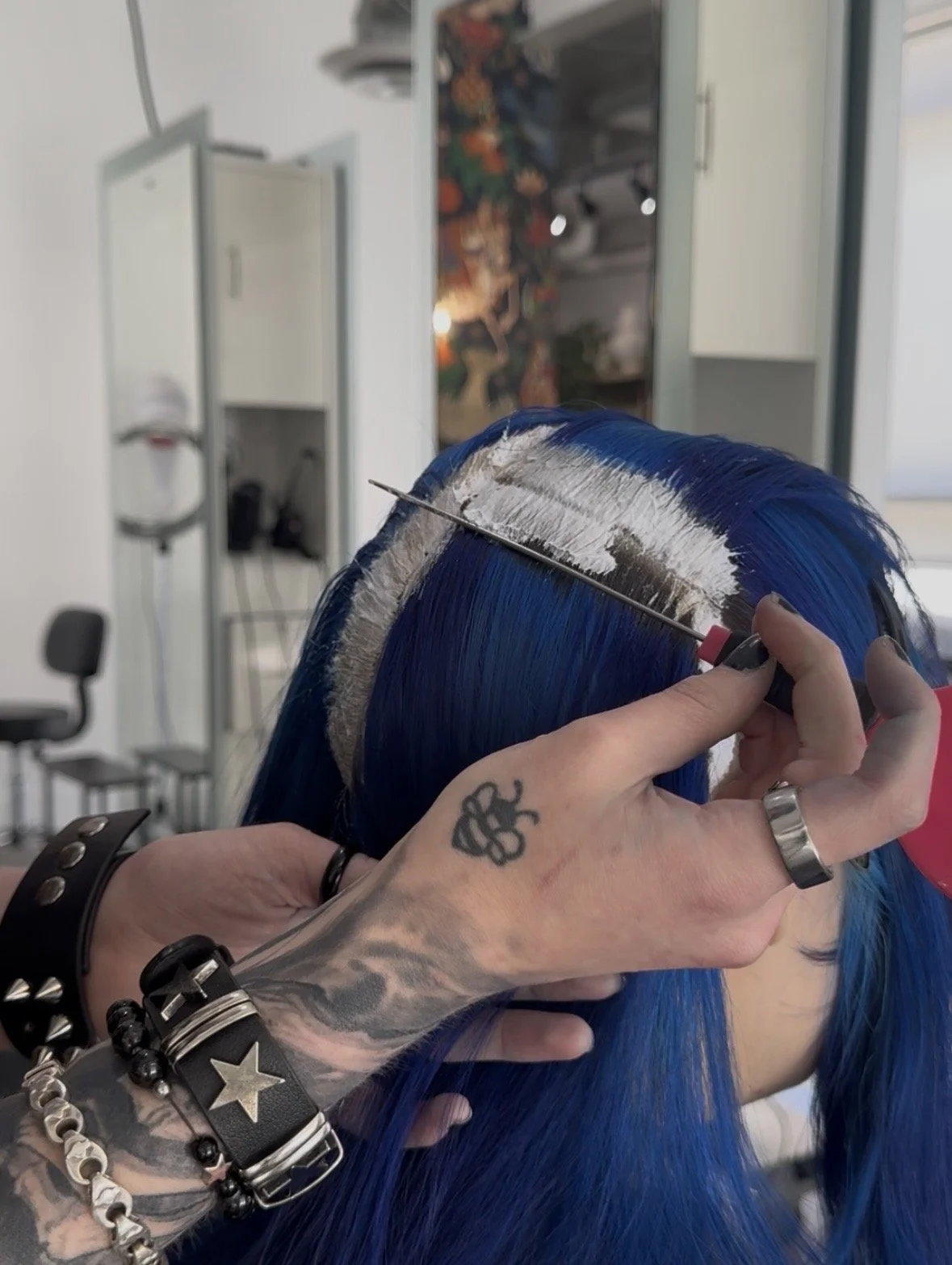
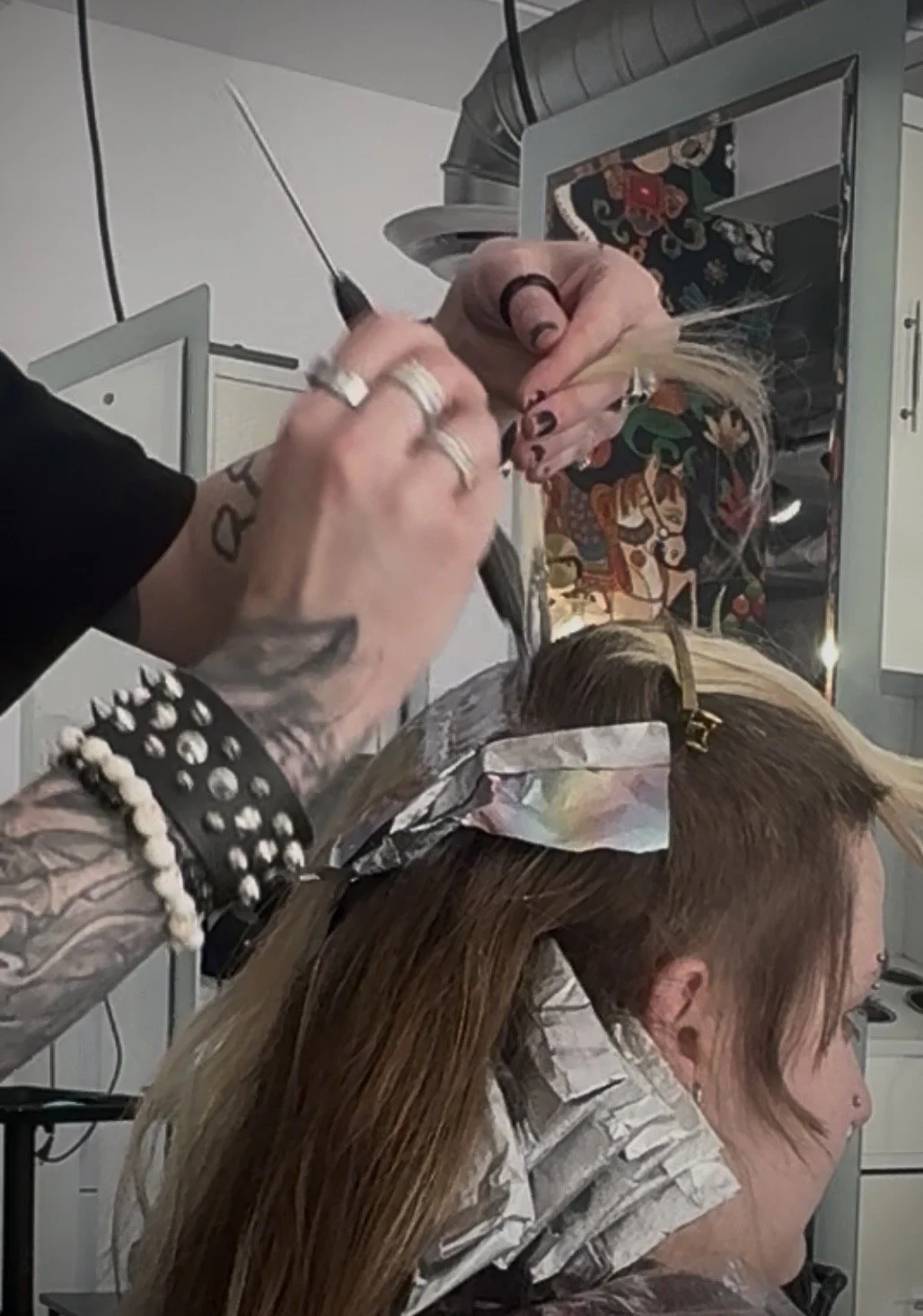
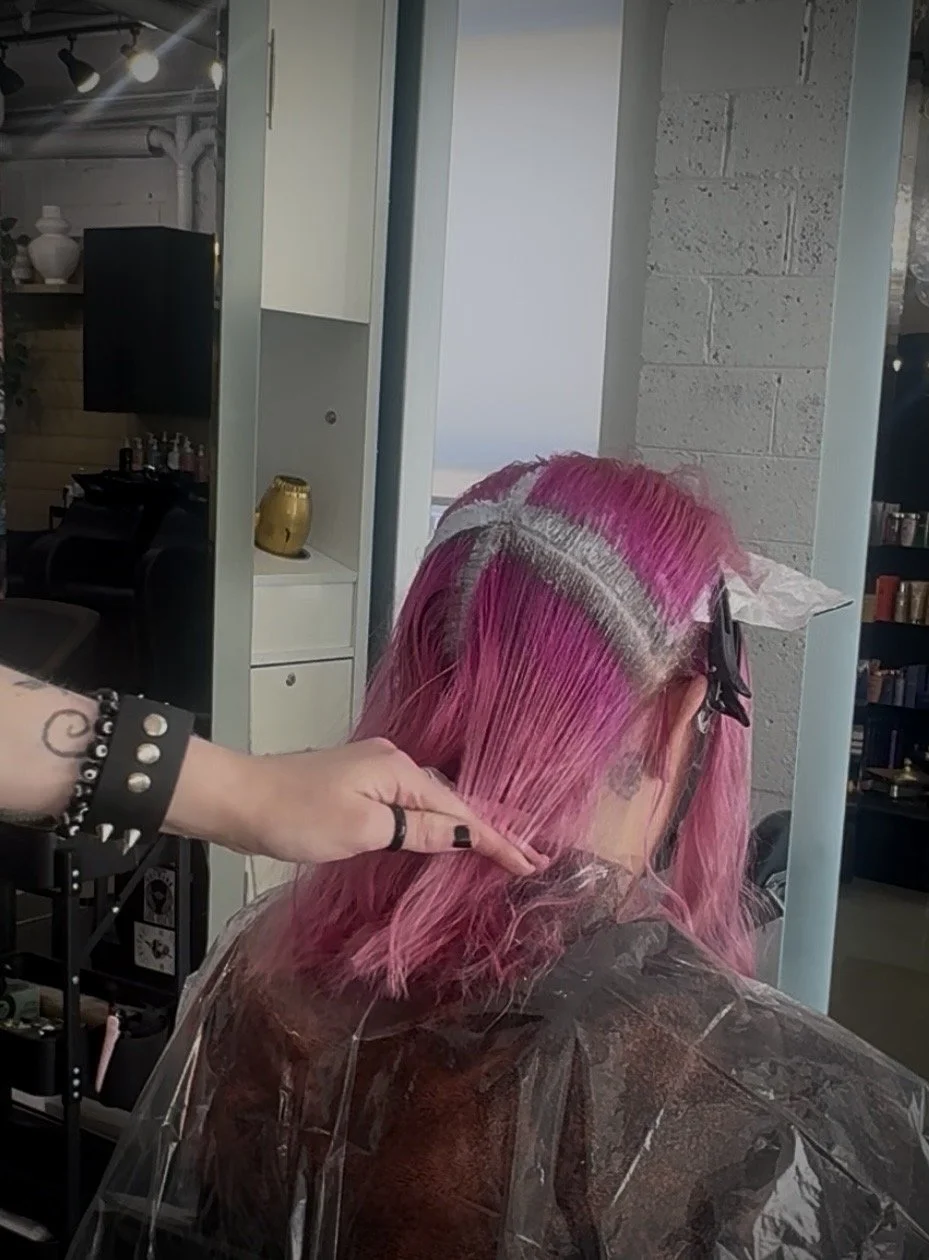
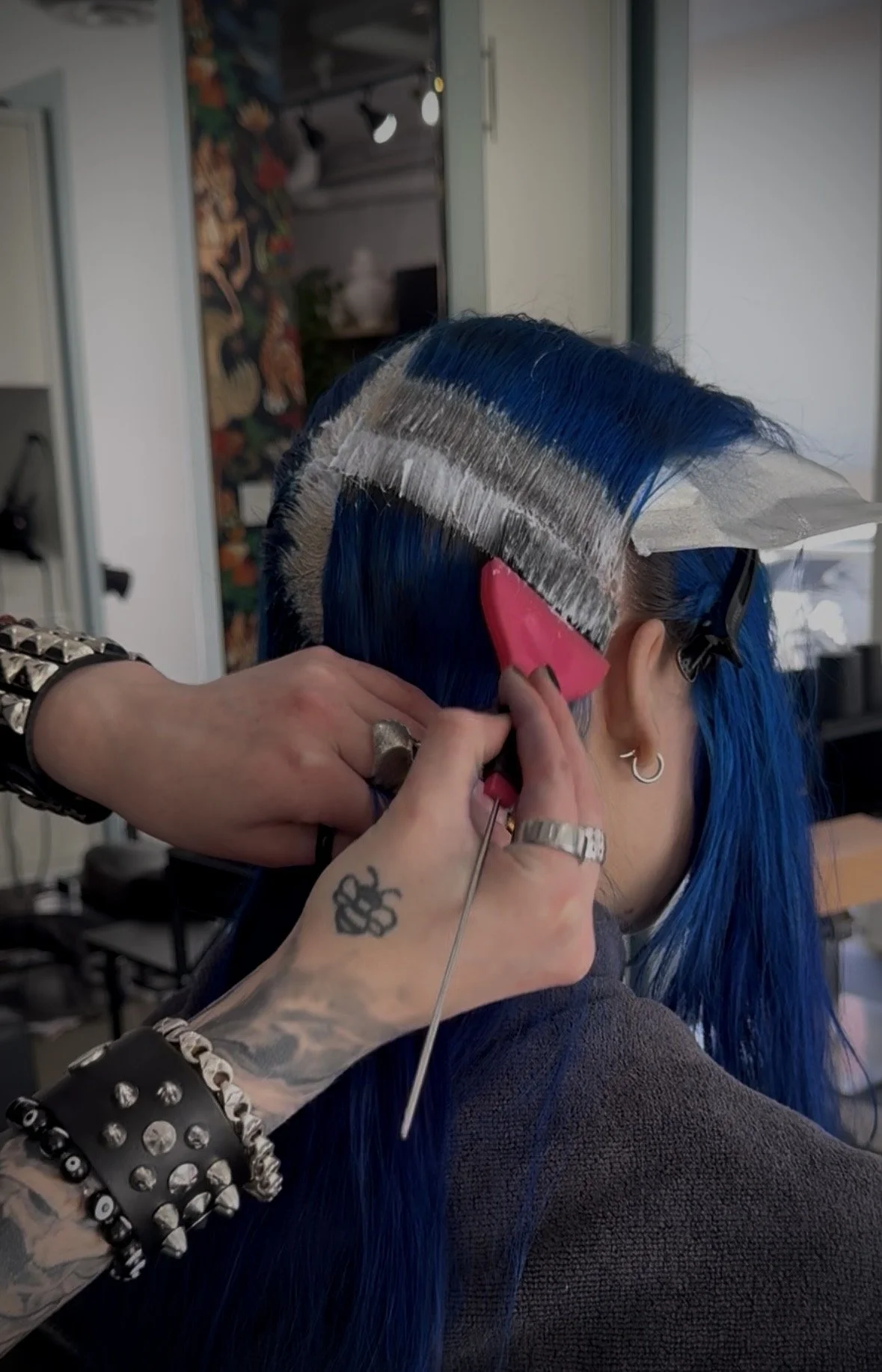
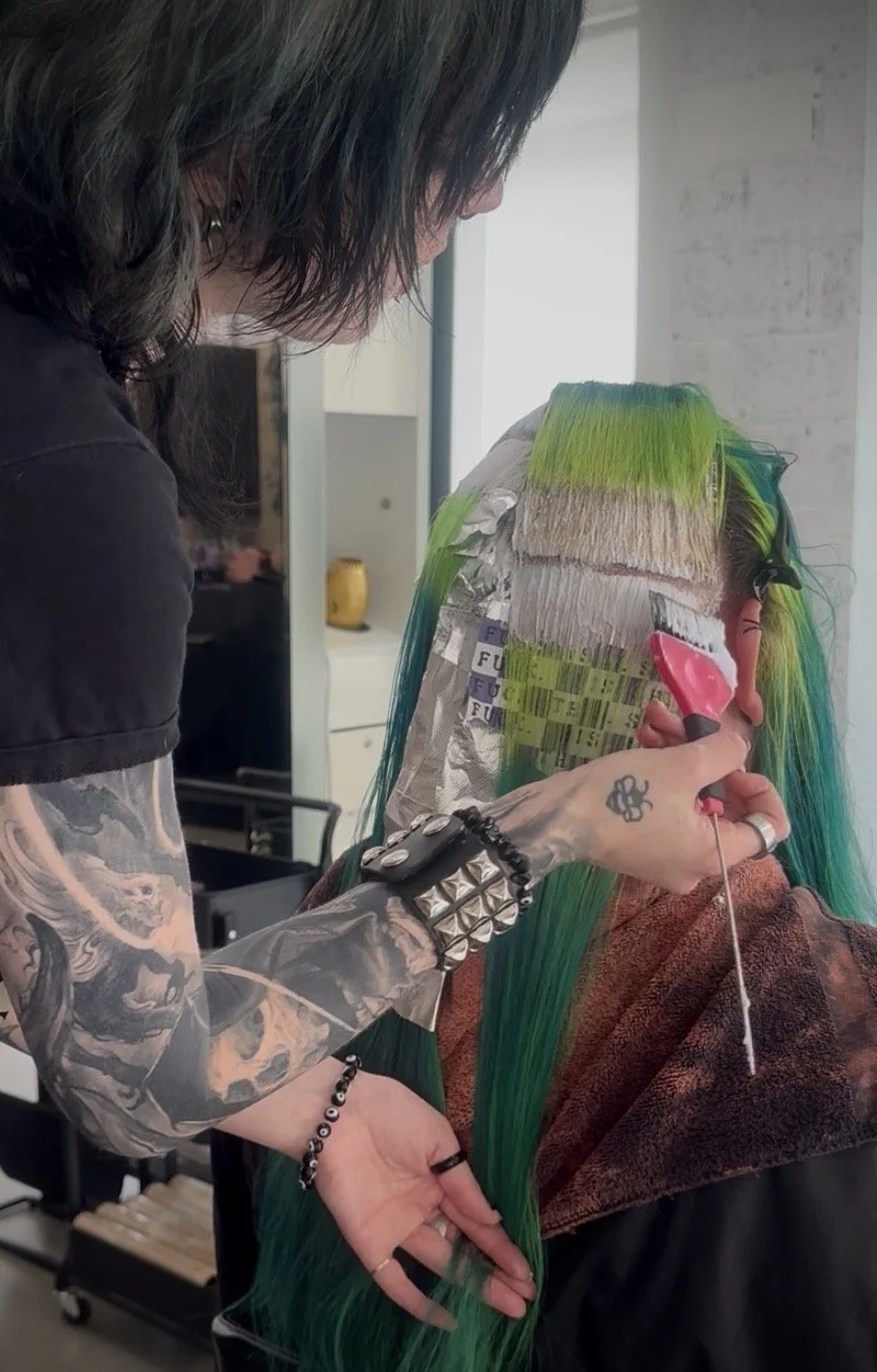
Sectioning, scalp heat and application order
Clean, consistent sections help me see what I’m doing and apply product evenly. I use a rat tail color brush to keep my partings clean and precise. I use foils around sections exposed to air in every application, and add more foil insulation when regrowth is eight weeks or longer to help keep the lightener from drying out. Hair around the hairline is often finer than the hair through the back, so I don’t treat every area exactly the same.
Scalp heat is a real thing, and application order matters. The heat from the scalp can make the roots process faster, which can create a band if I don’t plan my application around it. I start in the back around the crown, work my way down, and then move to the front. Some sections can finish faster than others, and the nape can trap heat, so I keep that in mind as I plan my order and monitor each area. I never put a scalp bleach under heat; I let the lightener process according to its manufacturer’s directions and keep checking the hair.
When I get to the front, I use vertical sections and apply to the hairline last. The hairline is usually finer, so I don’t want it sitting with lightener for as long as the areas I started earlier. I keep checking the hair as I go because every section does not process at the same speed.
I move through one clean parting at a time, applying the lightener right to the new growth and being careful not to drag it onto the old blonde. A scalp bleach retouch takes time: a slow, meticulous application beats a fast, messy one every time. I’d rather take my time with clean sections and even saturation than rush through it and miss something.
Saturation has to be even
I take fine sections and saturate both sides of each one. That helps me avoid dry or skimpy spots that can lift unevenly or leave warmth and bands. I check the coverage before moving on.
Keep checking as it processes
I don’t assume the whole head is ready at once. Since I start in the back, I often rinse it before I’m done with the front. I check each area and rinse it when it reaches the lift I need, rather than leaving it to wait for the rest of the head.
Why I’m so particular about scalp bleach
I love a good scalp bleach. It’s the service I do the most, and it can make such a beautiful base for platinum blonde or vivid color. But being able to bleach something doesn’t mean it should automatically be bleached. Hair health, history and the condition of the regrowth have to be part of the plan.
That’s also why I’m so serious about sectioning, saturation, lightener choice and timing. They’re not tiny details. They’re the whole service. I fear being this picky is part of my job description 💀
If you’re looking for a scalp bleach retouch in Denver, book a consultation with me at Forma Collective Salon so we can talk through your hair history, your goals and what your hair can handle.
Frequently Asked Questions
Is scalp bleach right for everyone?
Not always. It depends on your scalp, hair history, current condition and the result you want. A consultation helps your stylist decide whether a scalp bleach is a good fit or whether another lightening plan makes more sense.
Why do you start a scalp bleach at the crown?
I start at the crown because the top of the head is usually the coldest area and can take longer to process. I also find it easier to flip through the hair as I apply when I start at the crown.
Why does even saturation matter?
Even saturation helps the regrowth lift more consistently. Missed or lightly covered spots may lift differently, while overlapping lightener onto previously lightened hair can put extra stress on that hair.
Why might you rinse the back before the front is done?
I apply in a planned order and check each area as I go. Since the back was started earlier, it may reach the lift I need while I’m still working on or monitoring the front. I often rinse the back separately rather than leaving it to wait for every section to finish at once.
Does scalp bleach damage hair?
Lightening can affect the condition of the hair, and the risk depends on the hair’s history, condition and how the service is performed. A stylist should assess the hair and plan the service around what it can safely handle. No lightening service can promise zero damage.
Do you use heat for a scalp bleach retouch?
No. I never put scalp bleach under heat. I follow the manufacturer’s directions for the lightener and monitor the hair as it processes.
What should I tell my stylist before a scalp bleach service?
Tell your stylist if your scalp is sensitive, irritated or has reacted to bleach or other color products before. That information can affect whether a scalp bleach retouch is appropriate and how the service is planned. Always speak up right away if you feel burning or strong discomfort during the appointment.